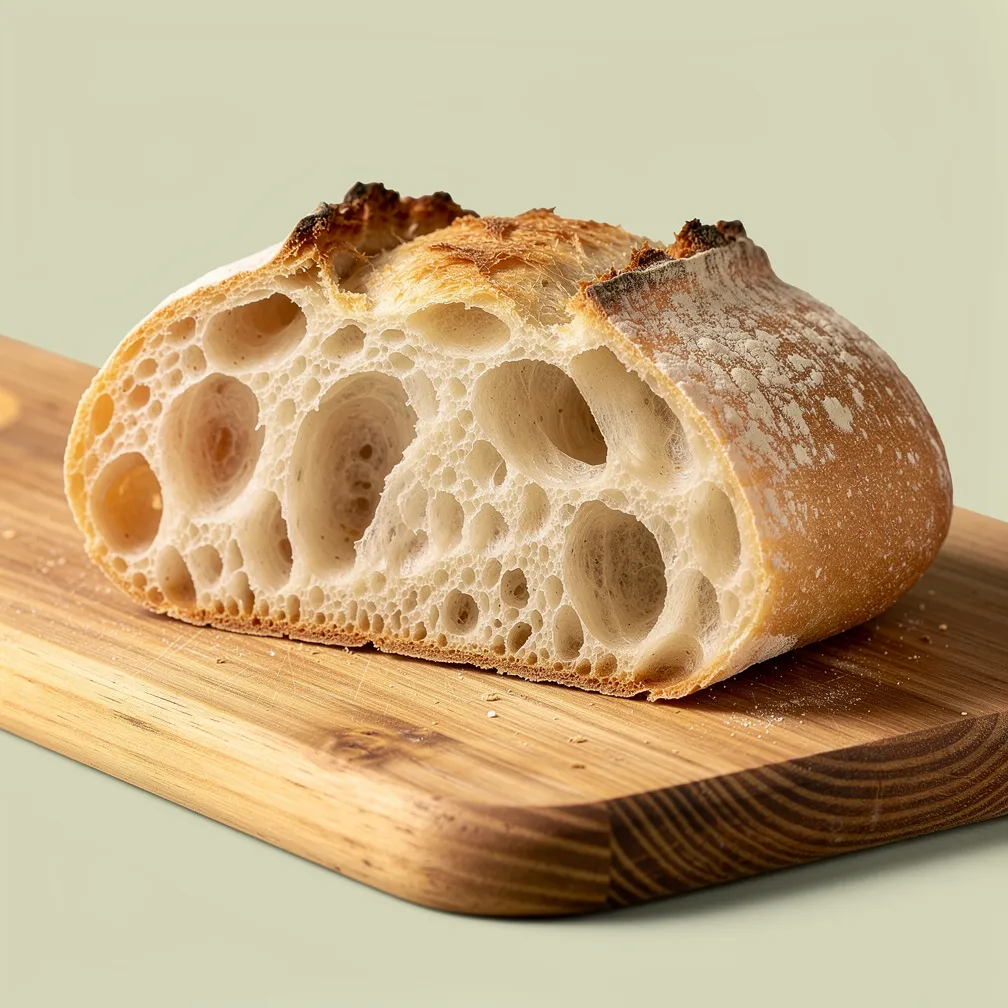
Ciabatta
| Macros | per 100 g |
|---|---|
| Calories | 270 kcal |
| Protein | 9.0 g |
| Fat | 3.0 g |
| Carbs | 52.0 g |
Ciabatta is an Italian white bread known for its flat, elongated shape, open crumb, and chewy crust, typically made from wheat flour, water, olive oil, salt, and yeast. It is widely used for sandwiches, bruschetta, and as a table bread, and is a staple of Italian and Mediterranean cuisine. Per 100 g, ciabatta provides 270 kcal, 9 g of protein, 3 g of fat, and 52 g of carbohydrates, with 2.5 g of dietary fibre and only 1.5 g of sugars. Notable minerals include sodium at 480 mg per 100 g, potassium at 135 mg, and calcium at 22 mg. No glycemic index value is available for this entry. Ciabatta is suitable for vegan, vegetarian, pescatarian, dairy-free, and Mediterranean dietary patterns.
How many calories in ciabatta?
Ciabatta contains 270 kcal per 100 g. A typical ciabatta roll weighs around 90–100 g, putting a single roll at approximately 245–270 kcal.
How much sodium is in ciabatta?
Ciabatta contains 480 mg of sodium per 100 g, which is relatively high compared to many other bread types. This is worth noting for anyone keeping an eye on their daily sodium intake.
Is ciabatta vegan?
Yes, ciabatta is vegan. Traditional ciabatta is made from flour, water, olive oil, salt, and yeast, containing no animal-derived ingredients, and it also fits vegetarian, pescatarian, and dairy-free dietary patterns.
Diets
Get Vnutri
Log meals, track daily totals, save favorites. Free on iOS and Android.
Macros · per 100 g
| Macros | Amount |
|---|---|
| Calories | 270 kcal |
| Protein | 9.0 g |
| Fat | 3.0 g |
| Carbs | 52.0 g |
| Sugars | 1.5 g |
| Fiber | 2.5 g |
| Fats breakdown | Amount |
|---|---|
| Saturated | 0.50 g |
| Monounsaturated | 1.8 g |
| Polyunsaturated | 0.50 g |
| Cholesterol | 0 mg |
| Minerals | Amount |
|---|---|
| Calcium | 22.0 mg |
| Iron | 1.8 mg |
| Potassium | 135 mg |
| Sodium | 480 mg |
| Vitamins | Amount |
|---|---|
| Vitamin A | 0 mcg |
| Vitamin C | 0 mg |
| Vitamin B12 | 0 mcg |