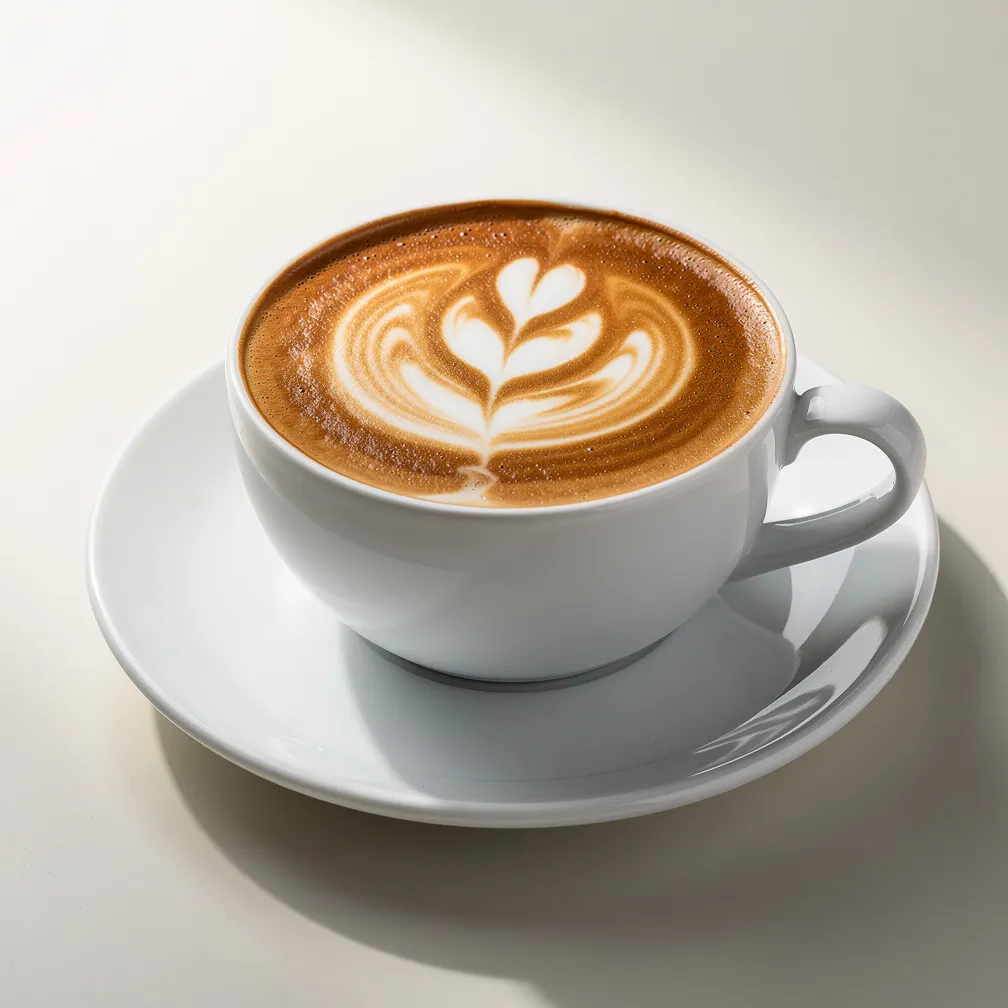
Cappuccino
| Macros | per 100 g |
|---|---|
| Calories | 50 kcal |
| Protein | 2.5 g |
| Fat | 2.5 g |
| Carbs | 4.0 g |
Cappuccino is an espresso-based coffee drink made with steamed milk and a layer of milk foam, typically served in a 150–180 ml cup. It originated in Italy and is now a staple of café culture worldwide, usually consumed at breakfast or as a mid-morning drink. Per 100 g, cappuccino provides 50 kcal, 2.5 g of protein, 2.5 g of fat and 4 g of carbohydrates, of which 3.8 g are sugars, with no dietary fibre. It contributes 130 mg of potassium and 90 mg of calcium per 100 g, along with 25 mcg of vitamin A and 0.2 mcg of vitamin B12. No glycemic index value is available for this drink. Cappuccino is suitable for vegetarian, gluten-free and Mediterranean dietary patterns.
How many calories in a cappuccino?
Cappuccino contains 50 kcal per 100 g. A standard 150 ml serving comes to roughly 75 kcal, though this rises if sugar or flavoured syrups are added.
How much calcium is in a cappuccino?
Cappuccino provides 90 mg of calcium per 100 g, largely from the steamed milk it contains. A standard 150 ml cup delivers around 135 mg of calcium.
Is cappuccino gluten-free?
Yes, a standard cappuccino made from espresso and milk is gluten-free. The main ingredients — coffee and dairy milk — contain no gluten, though flavoured syrups or certain add-ins could introduce it.
Diets
Get Vnutri
Log meals, track daily totals, save favorites. Free on iOS and Android.
Macros · per 100 g
| Macros | Amount |
|---|---|
| Calories | 50.0 kcal |
| Protein | 2.5 g |
| Fat | 2.5 g |
| Carbs | 4.0 g |
| Sugars | 3.8 g |
| Fiber | 0 g |
| Fats breakdown | Amount |
|---|---|
| Saturated | 1.6 g |
| Monounsaturated | 0.70 g |
| Polyunsaturated | 0.10 g |
| Cholesterol | 8.0 mg |
| Minerals | Amount |
|---|---|
| Calcium | 90.0 mg |
| Iron | 0 mg |
| Potassium | 130 mg |
| Sodium | 35.0 mg |
| Vitamins | Amount |
|---|---|
| Vitamin A | 25.0 mcg |
| Vitamin C | 0 mg |
| Vitamin B12 | 0.20 mcg |