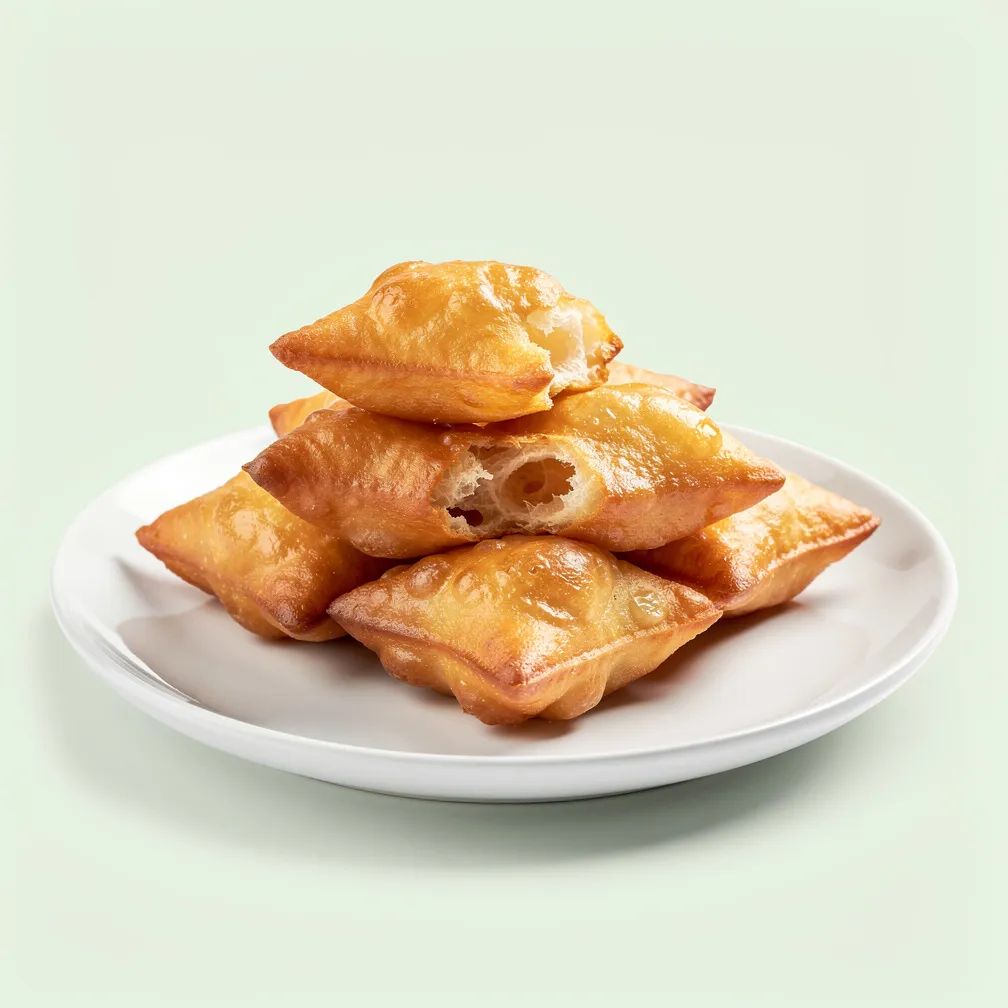
Baursaki fried dough
| Macros | per 100 g |
|---|---|
| Calories | 372 kcal |
| Protein | 7.5 g |
| Fat | 18.5 g |
| Carbs | 45.0 g |
Baursaki is a traditional Central Asian fried dough, particularly common in Kazakh and Kyrgyz cuisine, where it is served at celebrations, family gatherings and alongside tea. The dough is shaped into small rounds or diamonds and deep-fried until golden. Per 100 g, baursaki provides 372 kcal, 7.5 g of protein, 18.5 g of fat and 45 g of carbohydrates, with 1.2 g of dietary fibre and 6.5 g of sugars. The fat content reflects the deep-frying preparation method. Notable minerals include sodium at 310 mg and potassium at 110 mg per 100 g, along with 35 mg of calcium. No glycemic index data is available for this food. Baursaki is suitable for vegetarian dietary patterns.
How many calories in baursaki fried dough?
Baursaki contains 372 kcal per 100 g, making it a calorie-dense food due to its deep-frying preparation. A single piece typically weighs around 30–40 g, putting one piece at roughly 110–150 kcal.
How much sodium is in baursaki?
Baursaki contains 310 mg of sodium per 100 g, which comes primarily from salt added to the dough. This is a moderately notable amount to be aware of if monitoring daily sodium intake.
Is baursaki vegetarian-friendly?
Yes, baursaki is suitable for a vegetarian diet, as it is typically made from flour, eggs, milk, butter and yeast or baking soda. It is not, however, listed as vegan due to the use of animal-derived ingredients.
Diets
Get Vnutri
Log meals, track daily totals, save favorites. Free on iOS and Android.
Macros · per 100 g
| Macros | Amount |
|---|---|
| Calories | 372 kcal |
| Protein | 7.5 g |
| Fat | 18.5 g |
| Carbs | 45.0 g |
| Sugars | 6.5 g |
| Fiber | 1.2 g |
| Fats breakdown | Amount |
|---|---|
| Saturated | 4.5 g |
| Monounsaturated | 8.5 g |
| Polyunsaturated | 4.0 g |
| Cholesterol | 28.0 mg |
| Minerals | Amount |
|---|---|
| Calcium | 35.0 mg |
| Iron | 1.8 mg |
| Potassium | 110 mg |
| Sodium | 310 mg |
| Vitamins | Amount |
|---|---|
| Vitamin A | 15.0 mcg |
| Vitamin C | 0 mg |
| Vitamin B12 | 0.10 mcg |