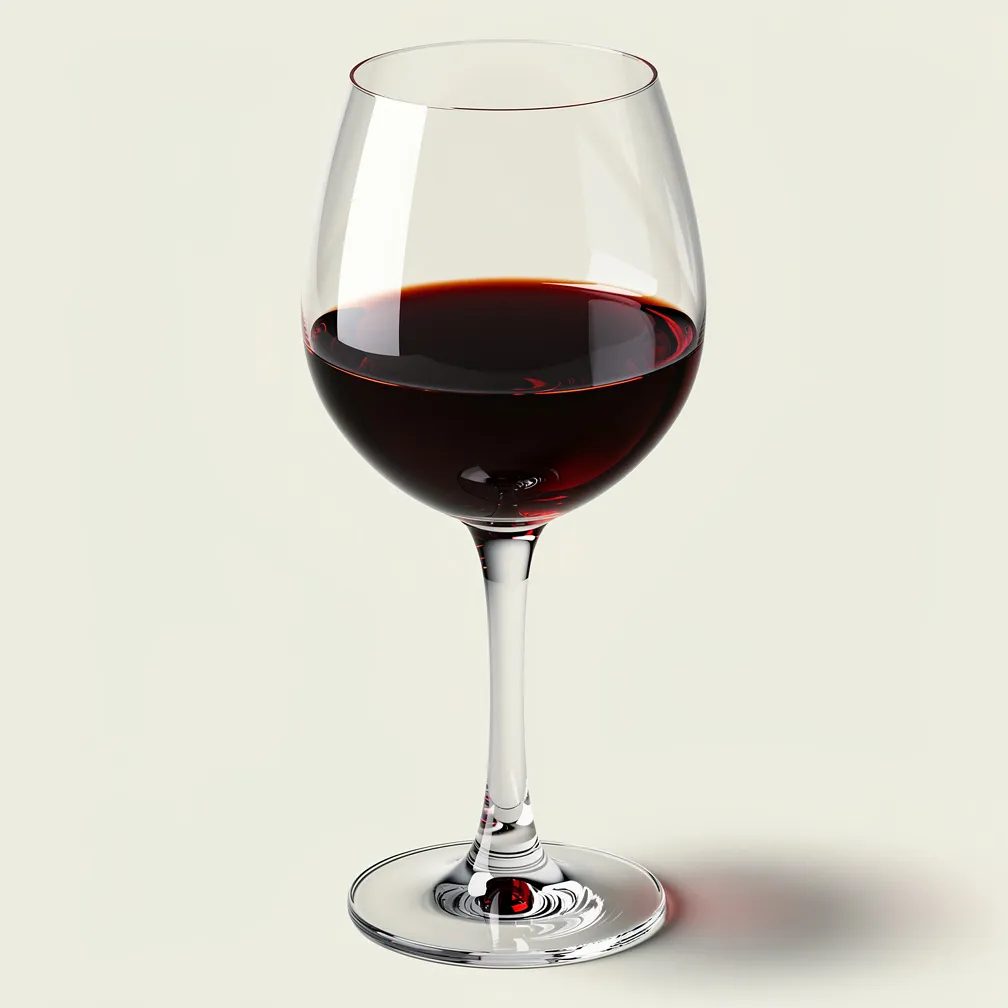
Barolo DOCG
| Macros | per 100 g |
|---|---|
| Calories | 85 kcal |
| Protein | 0.1 g |
| Fat | 0.0 g |
| Carbs | 1.5 g |
Barolo DOCG is a dry red wine produced from Nebbiolo grapes in the Langhe area of Piedmont, Italy, and is one of the country's most prestigious appellations. It is typically served in a wide-bowled glass alongside rich meat dishes, aged cheeses, or truffles, and is rarely consumed in large quantities — a standard pour is around 125–150 ml. Per 100 g, Barolo provides 85 kcal, 0.1 g of protein, 0 g of fat, and 1.5 g of carbohydrates, of which 0.5 g are sugars, with no dietary fibre. Among minerals, it contains 110 mg of potassium and 8 mg of calcium per 100 g. No glycemic index value is available for this wine. It fits keto and Mediterranean dietary patterns.
How many calories in Barolo wine?
Barolo contains 85 kcal per 100 g. A standard 125 ml pour comes to approximately 106 kcal, while a more generous 150 ml serving adds up to around 128 kcal.
Is Barolo keto-friendly?
Barolo is considered keto-compatible, with only 1.5 g of carbohydrates per 100 g and 0.5 g of sugars. A typical 125 ml glass contributes roughly 1.9 g of carbs, which fits within most ketogenic daily limits when consumed in moderation.
How much potassium is in Barolo?
Barolo contains 110 mg of potassium per 100 g, making it a modest source of this mineral among beverages. A standard 125 ml serving provides around 138 mg of potassium.
Diets
Get Vnutri
Log meals, track daily totals, save favorites. Free on iOS and Android.
Macros · per 100 g
| Macros | Amount |
|---|---|
| Calories | 85.0 kcal |
| Protein | 0.10 g |
| Fat | 0 g |
| Carbs | 1.5 g |
| Sugars | 0.50 g |
| Fiber | 0 g |
| Fats breakdown | Amount |
|---|---|
| Saturated | 0 g |
| Monounsaturated | 0 g |
| Polyunsaturated | 0 g |
| Cholesterol | 0 mg |
| Minerals | Amount |
|---|---|
| Calcium | 8.0 mg |
| Iron | 0.40 mg |
| Potassium | 110 mg |
| Sodium | 4.0 mg |
| Vitamins | Amount |
|---|---|
| Vitamin A | 0 mcg |
| Vitamin C | 0 mg |
| Vitamin B12 | 0 mcg |