Iceberg Lettuce vs Spinach: Calories, Vitamins, Minerals Compared
Iceberg lettuce vs spinach per 100 g: calories, fiber, vitamin A, vitamin K, iron, calcium and when the spinach swap is genuinely worth it for nutrition.
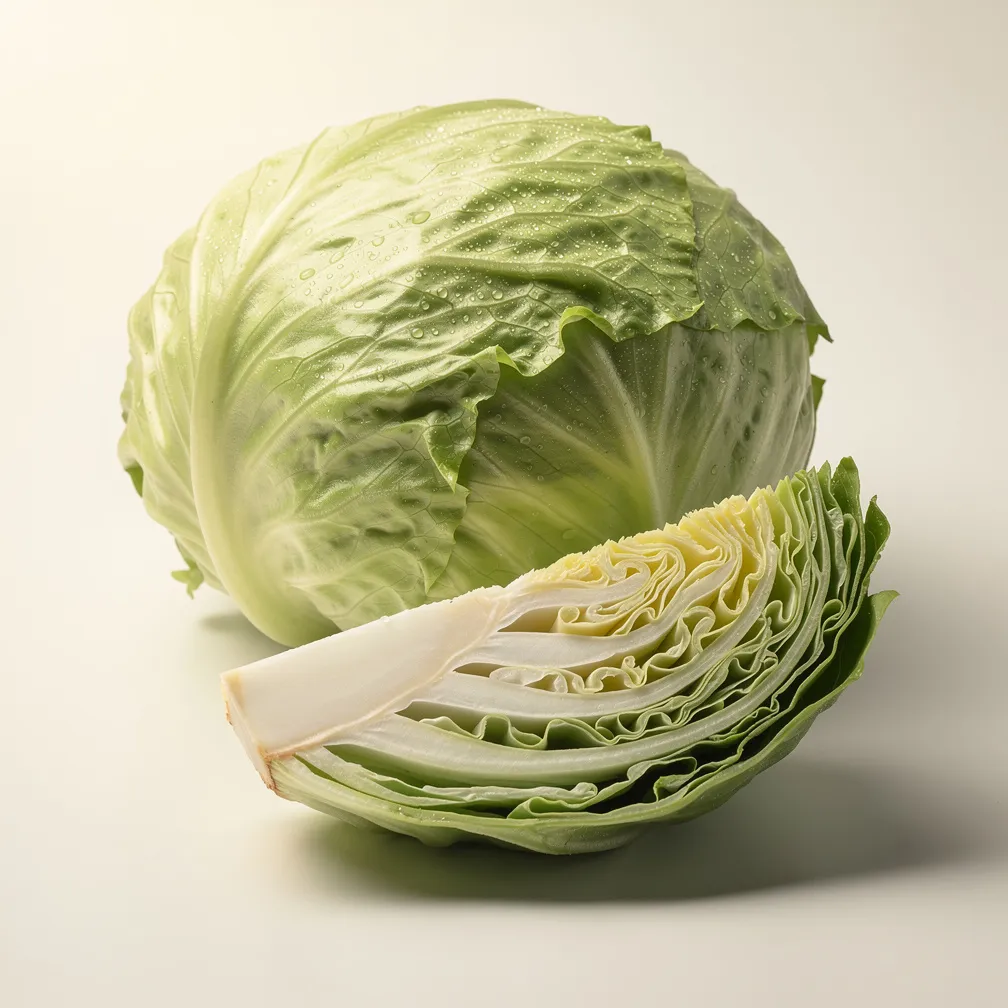
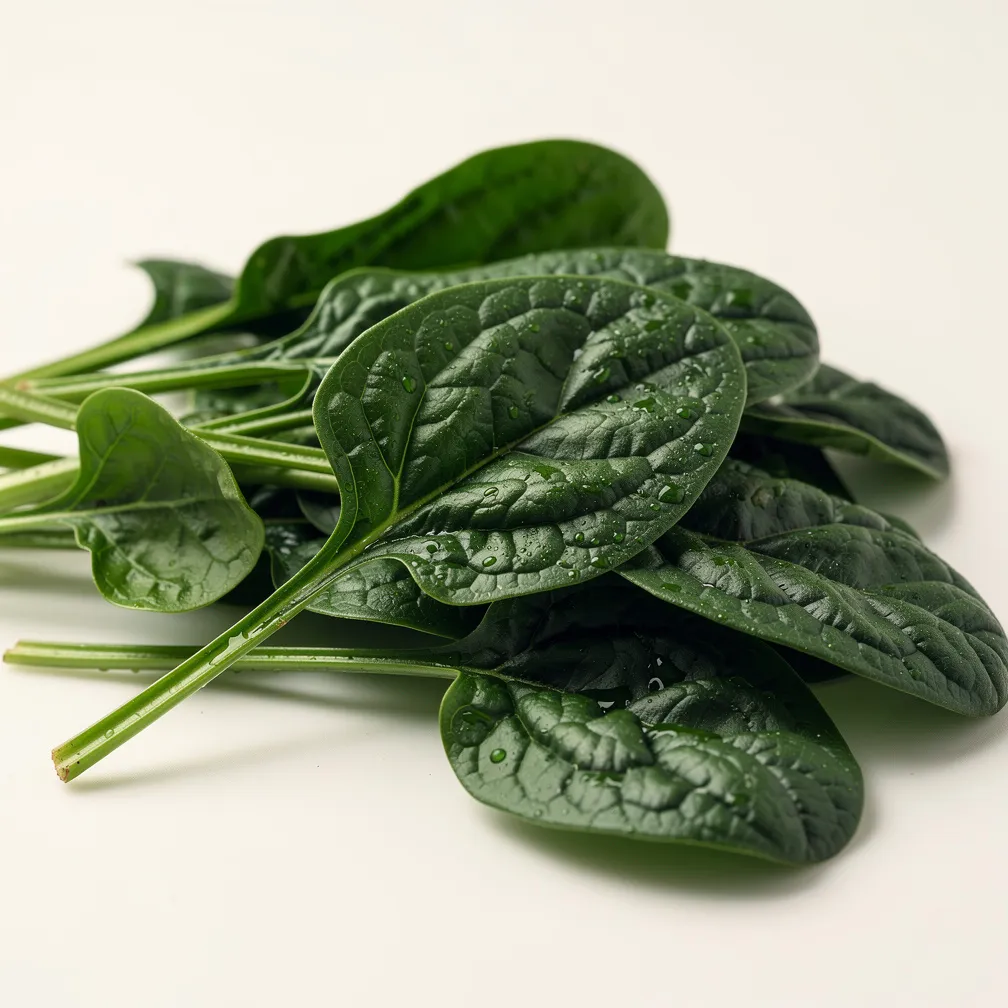
Iceberg lettuce and spinach both look like base-of-the-bowl greens — but the nutrient density gap between them is one of the largest in the entire produce aisle. Iceberg is 96 % water with a calorie count of 13 per 100 g and a vitamin profile that mostly rounds to zero. Spinach is the same calorie ballpark (23 kcal) but delivers 26 mg of vitamin C, 470 µg of vitamin A, 394 µg of vitamin K, 2.1 mg of iron, and 460 mg of potassium per 100 g.
This article compares the two on macros, micronutrients, and culinary use — and shows when iceberg's neutrality is the point and when spinach is the genuinely better pick.
Quick comparison
| Per 100 g | Iceberg lettuce | Spinach |
|---|---|---|
| Calories | 13 kcal | 23 kcal |
| Protein | 1.0 g | 2.8 g |
| Fat | 0 g | 0.5 g |
| Carbohydrate | 1.9 g | 3.2 g |
| Sugars | 1.9 g | 0.4 g |
| Fiber | 0.9 g | 2.2 g |
| Potassium | 170 mg | 460 mg |
| Iron | 0.4 mg | 2.1 mg |
| Calcium | 18 mg | 129 mg |
| Vitamin A | 9 µg | 469 µg |
| Vitamin C | 1 mg | 26 mg |
| Vitamin K | 24 µg | 394 µg |
| Folate | 47 µg | 170 µg |
Numbers come from the Vnutri food catalog.
Macros and calories
Both greens are minimal on calories — 13 vs 23 kcal per 100 g. Iceberg is mostly water (96 %); spinach is 91 % water but packs more dry matter into the remaining 9 %. Protein is 1.0 g for iceberg, 2.8 g for spinach — nearly 3× more per gram of leaf, which adds up over a typical 100–200 g serving in a salad or smoothie.
Fiber doubles in spinach (2.2 vs 0.9 g per 100 g). Combined with the leaf's higher protein and lower sugar content, spinach is a more satiety-effective base for the same calorie budget.
The headline: same calorie ballpark, very different nutrient density.
Vitamins and minerals
The micronutrient comparison is where iceberg loses most categorically.
- Vitamin K: 394 µg in spinach vs 24 µg in iceberg. A 100 g serving of spinach covers ~330 % of the daily target on its own.
- Vitamin A (as beta-carotene): 469 µg in spinach vs 9 µg in iceberg — over 50× the carotenoid load. The deep-green colour comes from chlorophyll and carotenoids; iceberg's pale white-green has neither.
- Vitamin C: 26 mg in spinach vs 1 mg in iceberg. Not the world's top vitamin C source, but a usable contribution.
- Folate: 170 µg vs 47 µg — more than 3× per 100 g.
- Iron: 2.1 mg vs 0.4 mg — over 5× the iron, though spinach iron is non-heme and partially blocked by oxalates (more on that below).
- Calcium: 129 mg vs 18 mg — 7×, though again partially bound by oxalates.
- Potassium: 460 mg vs 170 mg — almost 3×.
Iceberg's only meaningful micronutrient contribution is a small amount of vitamin K and folate. Spinach hits the daily targets for several nutrients in a single 100-g serving.
The oxalate caveat
Spinach is high in oxalic acid, which binds to calcium and iron during digestion and reduces absorption. The calcium in spinach is roughly 5 % bioavailable (vs ~30 % in dairy or kale); the iron is about half as well-absorbed as iron from low-oxalate greens.
Practical implications:
- Don't count spinach as a primary calcium source — eat it for the other nutrients and get calcium elsewhere.
- For iron, pair spinach with a source of vitamin C (citrus, peppers, tomato) at the same meal — vitamin C boosts non-heme iron absorption up to 3×.
- Cooking spinach reduces oxalate by 30–80 % depending on method (boiling is most effective, then discard the water). Raw spinach in smoothies and salads is still beneficial but lower on bioavailability.
- People prone to kidney stones (especially calcium oxalate stones) should moderate spinach intake.
This caveat doesn't reverse the comparison — spinach still wins on usable nutrient density — but it means the headline iron and calcium numbers overstate what reaches your bloodstream.
Diet compatibility
| Diet | Iceberg lettuce | Spinach |
|---|---|---|
| Vegan | Yes | Yes |
| Vegetarian | Yes | Yes |
| Pescatarian | Yes | Yes |
| Gluten-free | Yes | Yes |
| Dairy-free | Yes | Yes |
| Keto | Yes (very low carb) | Yes (very low carb) |
| Paleo | Yes | Yes |
| Mediterranean | Yes | Yes |
| Low-FODMAP | Yes | Yes |
Both fit virtually every diet. Spinach is on the keto and paleo recommended lists; iceberg fits too but contributes less nutritionally per gram.
When to choose iceberg lettuce
- When you want neutral, watery crunch as a textural element — burger toppings, wraps, taco shells, sandwich layers.
- For people with vitamin K restrictions on blood thinners (warfarin specifically), iceberg's lower K content is sometimes the safer choice — discuss with a doctor.
- When the salad's flavour comes from the dressing, cheese, or toppings and you don't want the green to compete.
- For texture in wedge salads where iceberg's structure is the point.
- For very young children or picky eaters as a transition green.
When to choose spinach
- Almost every other situation. The vitamin K, A, folate, and iron density make spinach one of the highest-yield greens you can put on a plate.
- Smoothies — spinach blends into a near-neutral flavour and adds dense nutrition.
- Pasta dishes, omelettes, frittatas, soups — wilts in seconds, contributes minerals.
- Salads that want substance — baby spinach pairs with fruit, nuts, and cheese without losing structure.
- Pregnancy diets — the folate content (170 µg per 100 g) is meaningful for neural tube development.
- Plant-based diets — iron and folate are two of the nutrients that need extra attention; spinach helps cover both.
How to use them in practice
For salads where the green is structural, baby spinach is the cleaner swap — it has the leaf size of mixed lettuces and tolerates dressing well. For wedge salads or specific recipes that call for iceberg's water-crisp crunch, the swap doesn't work.
Cooking unlocks more of spinach's iron and calcium by reducing oxalate. Sauté a handful in olive oil with garlic, wilt into pasta sauce, fold into eggs. Frozen spinach delivers near-identical micronutrient profile per gram and is cheaper for cooked applications.
For raw spinach in salads, pair with a vitamin C source (orange segments, strawberry, bell pepper, tomato) at the same meal to lift iron absorption. Don't add dairy at the same meal if iron uptake is the goal — calcium competes for the same transporter.
How Vnutri shows both
The iceberg lettuce food page shows per-100g calories and the full nutrient profile, while the spinach page does the same plus the dense vitamin K, A, folate, and iron numbers. Both appear in the vegetables category; spinach also shows up in the high-iron, high-calcium, and high-potassium filters.
Frequently asked questions
Is spinach really that much healthier than iceberg lettuce?
For nutrient density per gram, yes — by a large margin on almost every measure. Vitamin A is 50×, vitamin K is 16×, vitamin C is 26×, iron is 5×, calcium is 7×. The exception is when you specifically want a neutral, watery green for texture rather than nutrition.
Can I just eat spinach every day?
A daily 100 g serving is well within a healthy range for most adults. People on warfarin should keep vitamin K intake steady (consistent amount, not avoiding) and check with their cardiologist. People with a history of calcium-oxalate kidney stones should moderate. For everyone else, daily spinach is a clean choice.
Why is iceberg lettuce so low in nutrients?
Iceberg is bred for crunch and shelf life, not nutrient density. It's almost entirely water — 96 % by weight — held in a tight, pale-green head that ships and stores well. The breeding traded chlorophyll and nutrients for structural water content.
Does cooking spinach lose its nutrients?
It depends on the nutrient. Water-soluble vitamins (C, folate) drop substantially with prolonged cooking — keep it brief. Fat-soluble vitamins (A, K) and minerals are stable. Cooking actually increases the bioavailability of iron and calcium by reducing oxalate. Net read: a quick sauté or steam is better than long boiling.
Is baby spinach the same as regular spinach?
Same plant, harvested earlier. Baby spinach has a milder flavour and softer leaves but a slightly lower nutrient density per gram because the plant hasn't finished concentrating nutrients in the leaves. Still vastly more nutritious than iceberg.
Should I worry about oxalates in spinach?
For most people, no. The daily intake from typical spinach servings is well below problematic thresholds. People with a history of calcium-oxalate kidney stones should moderate intake and cook (boil + drain) to reduce oxalates. Pair with calcium-rich foods at separate meals if iron absorption is a priority.
References
- USDA FoodData Central — Lettuce, iceberg (FDC ID: 169248); Spinach, raw (FDC ID: 168462).
- Heaney RP, Weaver CM. Calcium absorption from kale. Am J Clin Nutr. 1990;51(4):656–657.
- Noonan SC, Savage GP. Oxalate content of foods and its effect on humans. Asia Pac J Clin Nutr. 1999;8(1):64–74.
- Hallberg L, Brune M, Rossander L. Effect of ascorbic acid on iron absorption from different types of meals. Hum Nutr Appl Nutr. 1986;40(2):97–113.