Honey vs Sugar: Calories, Glycemic Index, Fructose Compared
Honey vs sugar nutrition per 100 g: calories, glycemic index, fructose, trace minerals, and whether honey is a meaningfully better sweetener for blood sugar.
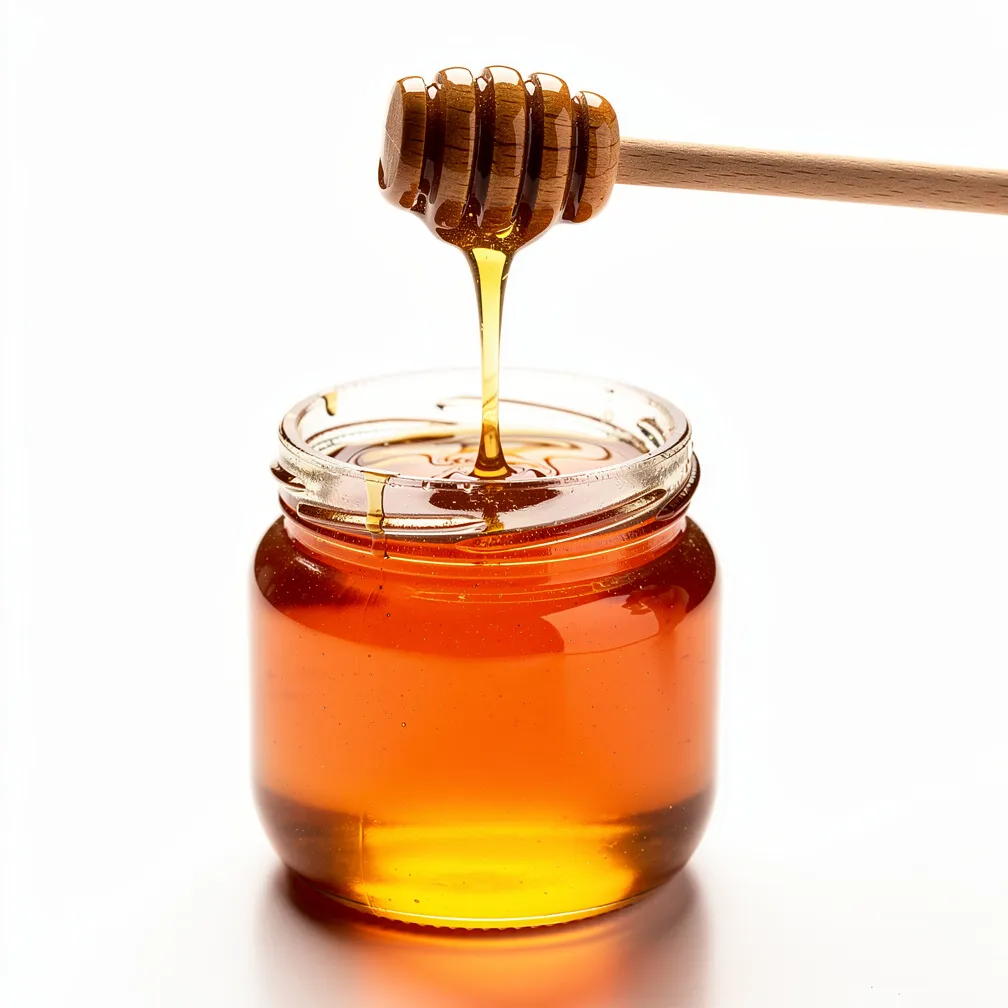
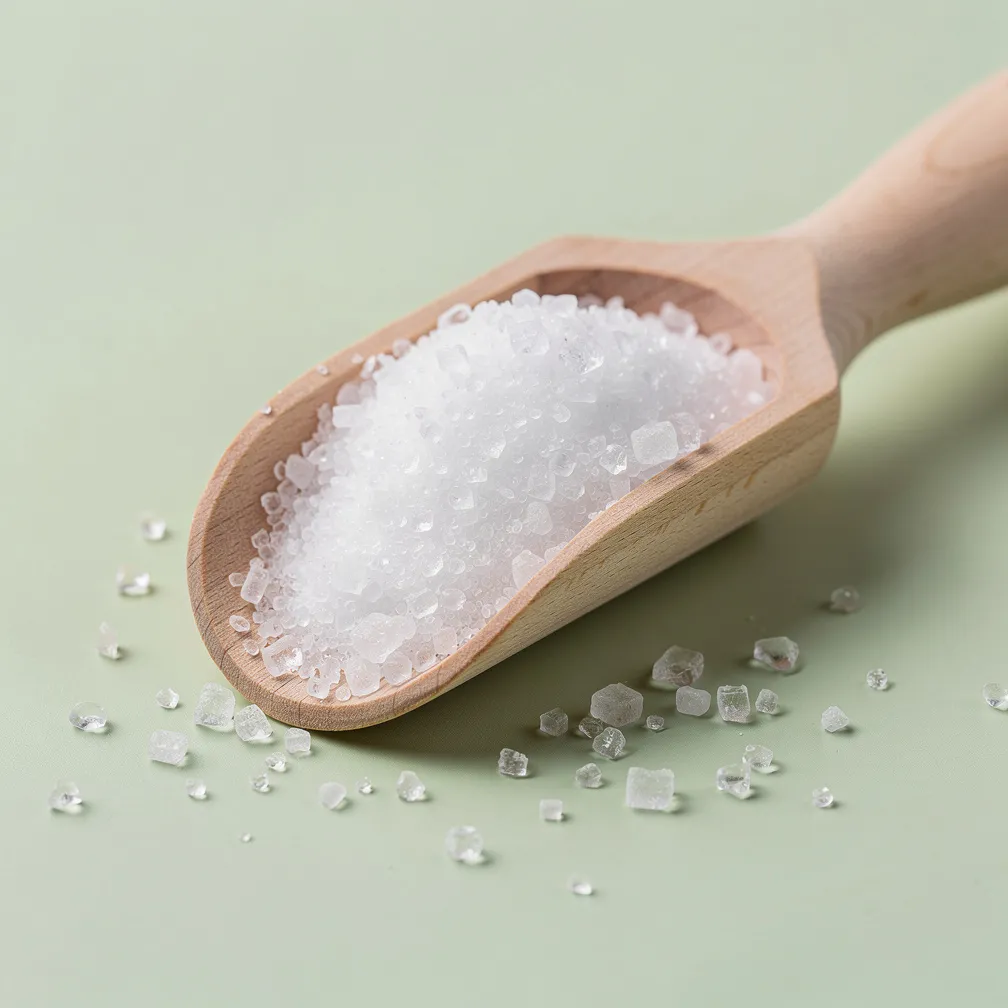
Honey is sold as the healthier sweetener — natural, ancient, full of trace nutrients. Sugar gets cast as the villain. The numbers tell a much less dramatic story. Honey is denser by weight (it weighs more per teaspoon), slightly lower in calories per 100 g, has a marginally lower glycemic index, and carries trace minerals at amounts too small to matter nutritionally. Otherwise, both are concentrated fructose and glucose that hit the bloodstream as fast sugar.
This article puts the two side by side on macros, glycemic index, micronutrients, and diet compatibility — and shows where the honey-is-healthier claim holds up and where it doesn't.
Quick comparison
| Per 100 g | Honey | Sugar |
|---|---|---|
| Calories | 304 kcal | 382 kcal |
| Protein | 0.3 g | 0.0 g |
| Fat | 0.0 g | 0.0 g |
| Carbohydrate | 78.9 g | 99.8 g |
| Sugars | 76.4 g | 99.2 g |
| Fiber | 0.0 g | 0.0 g |
| Water | 17 g | 0 g |
| Potassium | 52 mg | 21 mg |
| Calcium | 6 mg | 7 mg |
| Iron | 0.4 mg | 0.3 mg |
| Glycemic index | 59 (medium) | 70 (high) |
Macros and calories
Honey is 304 kcal per 100 g; sugar is 382. The gap is real but not what it looks like — honey is around 17 % water by weight, so its sweetness and energy come in a less concentrated form. By volume the gap shrinks: a teaspoon of honey (21 g) is 64 kcal vs a teaspoon of sugar (4 g) is 16 kcal — because honey is so much denser. Most recipes that swap honey for sugar one-for-one by volume end up adding calories, not subtracting.
Both are pure carbohydrate; neither carries protein, fat, or fiber. The carb composition differs slightly. Sugar (sucrose) is 50 % glucose, 50 % fructose, bonded into a disaccharide that breaks apart instantly in the gut. Honey is roughly 38 % fructose, 31 % glucose, plus 9 % other sugars and 17 % water — the fructose-to-glucose ratio sits slightly higher than sugar's, which is part of the reason honey's GI is lower.
Glycemic index and blood sugar
Honey sits at GI 59 (medium); sugar at GI 70 (high). The 11-point gap looks meaningful but plays out modestly in practice. Sugar's sucrose splits into equal parts glucose and fructose; honey's free fructose fraction is slightly higher, and fructose has a smaller direct effect on blood glucose than glucose does. That's where the GI advantage comes from — not from honey being "natural" or any inherent health quality.
The catch is that fructose hits the liver instead of muscle, and excess fructose intake is more strongly linked to insulin resistance and non-alcoholic fatty liver disease than glucose intake at the same calorie level. So while honey's blood-glucose response is gentler in the short term, the metabolic load of replacing sugar with honey at the same dose isn't necessarily better. The cleanest move is to use less sweetener overall, not to swap one for the other. More context in the glycemic index guide.
Glycemic load per typical 15 g serving (one tablespoon): honey ~7, sugar ~10. Modest gap, useful only if you're already using small amounts.
Vitamins and minerals
Both are nutritionally negligible at typical serving sizes. Honey edges ahead on potassium (52 vs 21 mg per 100 g), iron, copper, and small amounts of B vitamins — but to get meaningful potassium from honey you'd need to eat 200 g (over 600 kcal of pure sugar), which is absurd. The trace mineral and antioxidant content of honey gets used as marketing without honest math behind it.
What honey does carry that sugar doesn't: trace polyphenols and enzymes from bee handling. Raw, unfiltered honey contains diastase, invertase, glucose oxidase, and a small amount of plant-derived polyphenols. Most commercial honey is heated and filtered, which destroys the enzymes and reduces the polyphenol load. Manuka and other monofloral raw honeys retain more, with documented antibacterial activity — but at price points and quantities that don't change the basic story: this is still sugar.
Sugar has essentially zero micronutrients. Granulated white sugar is pure sucrose. Brown sugar has a trace of molasses that adds tiny amounts of calcium, iron, and potassium — meaningful only at large servings.
Diet compatibility
| Diet | Honey | Sugar |
|---|---|---|
| Vegan | No | Yes |
| Vegetarian | Yes | Yes |
| Pescatarian | Yes | Yes |
| Gluten-free | Yes | Yes |
| Dairy-free | Yes | Yes |
| Paleo | Yes | No |
| Mediterranean | Yes | Limited |
| Keto | No | No |
| Low-FODMAP | No (excess fructose) | Yes |
The diet compatibility story is the cleanest differentiator. Honey is not vegan (it's an animal product); sugar is. Paleo allows honey (a "natural" sweetener available to pre-agricultural societies) but excludes refined sugar. Mediterranean dietary patterns include moderate honey but treat refined sugar as occasional. Low-FODMAP excludes honey (excess fructose) but allows table sugar (sucrose is low-FODMAP because it's 50 % glucose, which prevents excess fructose from triggering symptoms).
Neither fits keto at meaningful doses — a single tablespoon of either eats most of a daily 20 g carb budget.
When to choose honey
- Slightly lower glycemic index — modest but real for blood-sugar management at small doses.
- Trace antibacterial and antioxidant compounds in raw, unfiltered honey — meaningful for topical wound care, marginally meaningful as a dietary contribution.
- Compatible with paleo and mediterranean diets where refined sugar is excluded or limited.
- Flavor — adds floral or wildflower notes that white sugar can't match. Better in tea, drizzled on yogurt, glazed on meat, or in baking where the moisture matters.
- Reduces hygroscopic moisture loss in baked goods — keeps muffins and cakes moist longer.
When to choose sugar
- Cheaper and more shelf-stable — predictable in baking and candy-making where exact crystallization matters.
- Vegan and low-FODMAP — the simpler pick for restricted diets.
- More precise in recipes — honey's water content can throw off bread, ice cream, and confectionery formulas.
- Cleaner-tasting in delicate preparations where you don't want a flavor signature (vanilla ice cream, light cocktails, pastry crème pâtissière).
- For someone tracking calories: sugar is denser by volume, so swapping one-for-one in volume terms gives you fewer total calories — opposite of what most people assume.
How to use them in practice
The honest framing is this: honey and sugar are both sweeteners, and both should be limited. Replacing one with the other at the same dose isn't a meaningful health move. The meaningful move is using less of either — adding fruit for sweetness where possible, training your palate away from heavily-sweetened foods, and pairing any sweetener with fiber, fat, or protein when you do use it (honey on Greek yogurt with nuts, not honey on white toast).
Use honey when its flavor matters: drizzled over plain yogurt, glazed on roasted vegetables or salmon, stirred into hot tea, in marinades, on a cheese plate. Use sugar in baking when crystallization and texture matter (cookies, meringue, crème brûlée), and in confectionery where a clean sweetness profile is needed.
For blood-sugar management, the smarter swap is to neither honey nor sugar but to bulk sweeteners with no glycemic impact — erythritol, allulose, monk fruit — which leave the post-meal glucose curve flat. Stevia and sucralose are zero-calorie alternatives with no glycemic impact, though they carry their own taste and gut-microbiome trade-offs.
How Vnutri shows both
The honey food page and sugar food page include the full nutrient profile, GI value, and diet compatibility tags. The sweeteners category lists both alongside molasses, agave, and other natural sweeteners.
Frequently asked questions
Is honey actually healthier than sugar?
Marginally, at small doses. Honey has a slightly lower glycemic index (59 vs 70), trace minerals at amounts too small to matter nutritionally, and small polyphenol content in raw varieties. At typical sweetening doses, the metabolic difference is small. Total sugar intake matters far more than the choice between them.
Which has more calories, honey or sugar?
Per 100 g, sugar is higher — 382 vs 304 kcal — because honey contains about 17 % water. Per teaspoon, honey is higher: 21 g of honey weighs more than 4 g of sugar in the same volume, so the same teaspoon contains 64 kcal of honey vs 16 kcal of sugar. Volume-based substitution adds calories, not subtracts.
Is honey good for diabetes?
No more than sugar at the same dose. Honey's slightly lower GI doesn't change the fundamental calculation — it's concentrated free sugar that hits blood glucose quickly. For someone managing diabetes, both should be limited, and bulk alternatives (erythritol, allulose, stevia, monk fruit) are better swaps for daily use.
Can vegans eat honey?
No. Honey is an animal product made by bees, and most vegans exclude it. Agave, maple syrup, date syrup, and brown rice syrup are vegan alternatives. Refined white sugar is technically vegan but some vegans avoid it because some cane sugar is filtered through bone char in processing — beet sugar is bone-char-free by default.
Is raw honey better than commercial honey?
Marginally. Raw, unfiltered honey retains enzymes (diastase, invertase, glucose oxidase) and more polyphenols than heat-processed honey. The enzymes and polyphenols are real but the dietary contribution at typical serving sizes is minor. Manuka honey has documented antibacterial activity but at prices that don't make sense for sweetening tea.
Why is honey high-FODMAP but sugar isn't?
Honey is high in excess fructose — its fructose-to-glucose ratio is roughly 1.2:1, which means there's free fructose beyond what glucose can co-transport across the gut wall. Table sugar (sucrose) is exactly 50 % glucose and 50 % fructose bonded together, so once split, the glucose is sufficient to absorb all the fructose without excess. That's why sugar is low-FODMAP and honey isn't — counterintuitive, but the mechanism is well-documented.
References
- USDA FoodData Central — Honey (FDC ID: 169640).
- USDA FoodData Central — Sugars, granulated (FDC ID: 169655).
- Atkinson FS, Brand-Miller JC, Foster-Powell K. International tables of glycemic index and glycemic load values 2021. Am J Clin Nutr. 2021;114(5):1625–1632.
- Bobiş O, Dezmirean DS, Moise AR. Honey and diabetes: the importance of natural simple sugars in diet for preventing and treating different type of diabetes. Oxid Med Cell Longev. 2018;4757893.
- Stanhope KL. Sugar consumption, metabolic disease and obesity: the state of the controversy. Crit Rev Clin Lab Sci. 2016;53(1):52–67.
- Monash University Low FODMAP Diet App, 2024 edition.