Iodine: The Quiet Deficiency Back in 2025
Iodized salt solved iodine deficiency a century ago. Then artisanal salt, sea salt, and vegan diets brought it back. Sources, daily needs, the kelp trap, and country status.
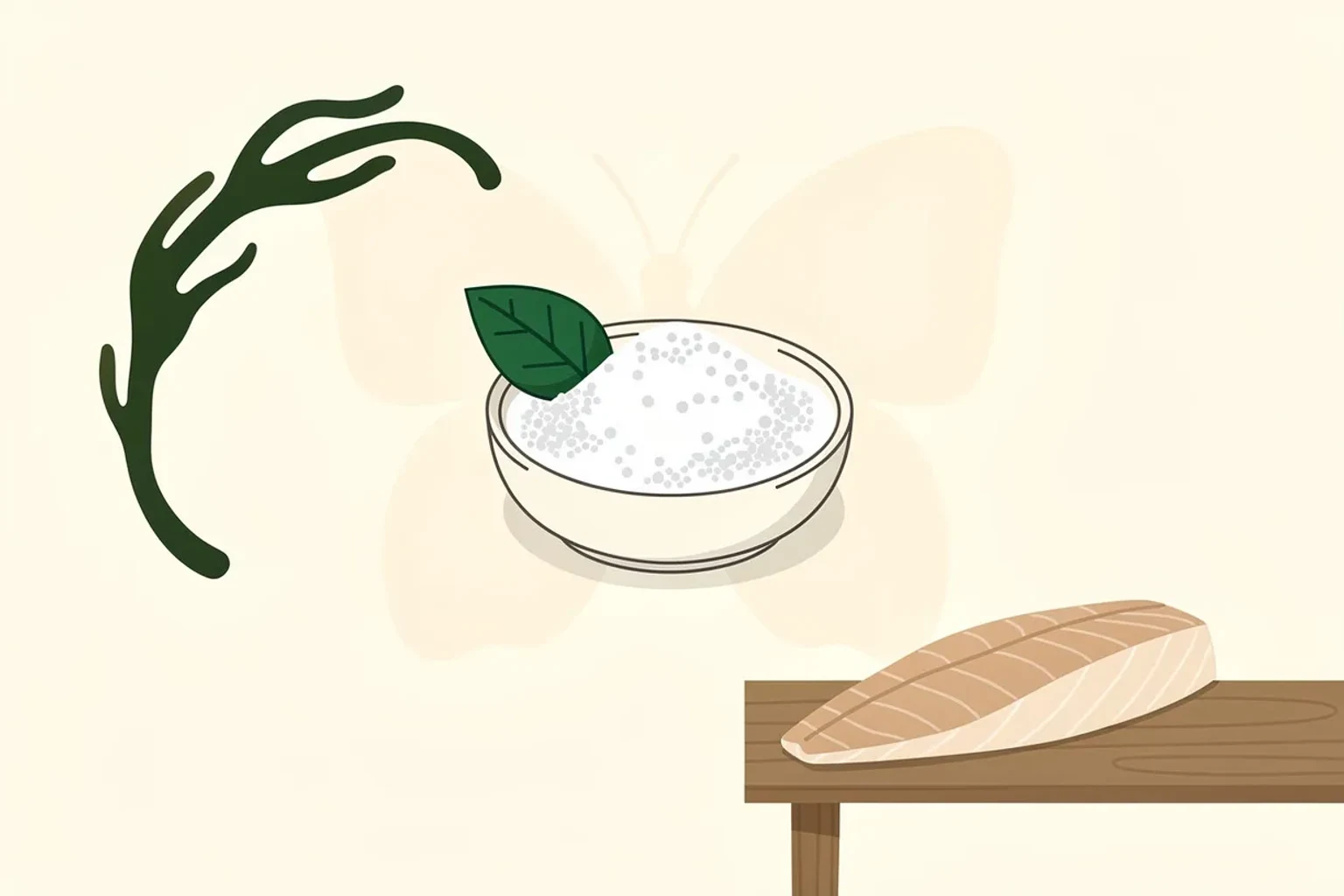
Iodine deficiency was one of the great public-health wins of the 20th century. Switzerland started iodizing salt in 1922; the US, Canada, and most of Europe followed within a decade. Goiter rates collapsed, cretinism nearly vanished, and iodine fell out of the public-health conversation.
Then the conversation came back. Pink Himalayan salt, French fleur de sel, kosher flake salt, Maldon — none of these are iodized. Bread bakers switched to non-iodized salt. Vegan and dairy-free diets eliminated two of the three main dietary sources. The result: iodine deficiency is rising again across Europe and parts of North America, especially in pregnant women, where the stakes are highest.
This guide covers what iodine does, how much you need, where to find it, and the kelp trap that catches well-meaning people from the other direction.
Why iodine matters
Iodine is a trace element with one main job: it's the central atom in thyroid hormones T3 (triiodothyronine, 3 iodine atoms) and T4 (thyroxine, 4 iodine atoms). The thyroid pulls iodine out of the bloodstream and assembles these hormones, which then regulate metabolism in every cell of the body.
When iodine runs low, the thyroid can't make enough hormone. Symptoms creep in: fatigue, cold intolerance, weight gain, dry skin, brain fog, slow heart rate. The thyroid swells trying to capture more iodine — that's a goiter.
The real damage is during pregnancy. Fetal brain development depends on maternal thyroid hormone in the first trimester, before the fetus makes its own. Maternal iodine deficiency during pregnancy is the leading preventable cause of intellectual disability worldwide. Even mild-to-moderate deficiency drops IQ by 6–10 points in offspring (Bath 2017, UK ALSPAC cohort).
Daily needs
| Group | RDA (mcg/day) |
|---|---|
| Adult | 150 |
| Pregnant | 220 |
| Breastfeeding | 290 |
| Children 1–8 | 90 |
| Children 9–13 | 120 |
| Upper limit | 1100 (adult) |
The pregnancy and breastfeeding numbers are higher because the fetus and infant draw iodine from the mother. The upper limit is a chronic-intake ceiling — going over occasionally is fine; sustained excess causes thyroid problems.
Top food sources
Per 100 g, raw catalog values:
| Food | Iodine (mcg/100 g) | Notes |
|---|---|---|
| Kelp (kombu, dry) | 2000–5000 | Can hit 50,000 in some brands — see warning below |
| Iodized salt | ~7500 | 1 g (1/4 tsp) ≈ 75 mcg |
| Cod | 110 | Best practical seafood source |
| Yogurt | 50–100 | Varies by region and feed |
| Shrimp | 35 | |
| Milk | 35 | Dairy is the #1 source in most Western diets |
| Cheese | 20–30 | |
| Eggs | 27 | Per 100 g; ~16 mcg per large egg |
| Sardines | 24 | |
| Tuna (canned) | 17 | Lower than expected — tuna is iodine-poor for a fish |
| Bread (US) | varies | Iodate dough conditioners — anywhere from 5 to 600 |
| Strawberries | 1 | Plants are negligible unless soil is iodine-rich |
Two patterns: dairy and sea fish carry most of the iodine in a typical mixed diet. Plant foods carry trace amounts unless the soil is unusually iodine-rich (rare). Bread is a wild card — depends entirely on whether the bakery uses iodate dough conditioner.
The kelp warning
Kelp — kombu, wakame, dulse, dried sea vegetables — is the opposite problem. A single gram of dried kombu can deliver 1000–5000 mcg of iodine. Some brands tested at 50,000 mcg per portion. That's 45× the daily upper limit in one teaspoon.
Acute overdose causes thyroid dysfunction in both directions: hyperthyroidism in some, hypothyroidism in others (the Wolff–Chaikoff effect — the thyroid shuts down protectively). Hashimoto's autoimmune thyroiditis can flare. Iodine-induced thyroid disease is well-documented in coastal Japanese populations who eat kelp daily.
Practical rules:
- Don't take concentrated kelp supplements unless prescribed and monitored.
- Kombu in dashi broth — fine; most of the iodine stays in the discarded kelp piece.
- Wakame in miso soup — fine in normal portions.
- Powdered kelp seasoning daily — too easy to overshoot. Track it.
If you need a supplement, use potassium iodide at a defined 150 mcg dose, not a kelp extract with an unknown variable load.
Iodized salt status by country
The reason iodine is back is geographic: salt iodization is voluntary, not mandatory, in most Western countries, and uptake has slipped.
- Russia. Voluntary. About 30 % of households use iodized salt. Deficiency rates rising.
- United States. Voluntary. Only ~50 % of table salt is iodized; sea salt, kosher salt, and processed food salt usually aren't. The shift to gourmet salts has cut household iodine intake significantly.
- Germany. Voluntary. ~80 % of bakeries use iodized salt — bread is the main delivery vehicle, which makes Germany one of the better-supplied Western countries.
- United Kingdom. Not iodized at all. UK adolescent girls now have measurable iodine deficiency (Bath 2017). The NHS has begun discussing mandatory iodization.
- France, Spain, Catalonia. Voluntary. Coverage incomplete, deficiency present.
Compare to Switzerland and the Nordic countries, where mandatory or near-universal iodization continues — and iodine deficiency stays solved.
Who's at high risk
- Vegans. No dairy, no fish, no eggs. The two biggest dietary sources are gone. See vegan diet.
- Pregnant women on plant-based diets. Highest-stakes group. First-trimester deficiency is the dangerous window.
- Low-sodium diets. Salt-restricted diets that also use non-iodized salt cut iodine intake from both directions.
- People who use only sea salt or pink salt at home and rarely eat dairy. The combination is common in health-conscious adults and is the typical Western deficiency profile.
- Northern, inland populations. Far from sea, low-iodine soil. Switzerland and the alpine regions historically had endemic goiter for this reason.
Testing
Iodine status is measured by urinary iodine concentration (UIC) in a spot urine sample. WHO thresholds for population studies:
- < 50 mcg/L — moderate-to-severe deficiency
- 50–99 mcg/L — mild deficiency
- 100–199 mcg/L — adequate
- 200–299 mcg/L — above requirements (fine for pregnancy)
- > 300 mcg/L — excessive
For individuals, a single spot test is rough — iodine intake varies day to day. Several samples or a 24-hour collection gives a more reliable picture. Serum TSH and free T4 give thyroid function but not iodine status directly.
Practical recommendations
- Lacto-ovo vegetarians. Dairy and eggs daily — usually sufficient. No supplement needed unless dairy intake is low.
- Pescatarians and omnivores. Sea fish (cod, sardines, shrimp) twice a week + any dairy — usually sufficient.
- Vegans. Either a 150 mcg potassium iodide supplement daily, or 1/4 teaspoon of iodized salt daily, or fortified plant milks if they're explicitly labeled with iodine. Don't rely on kelp.
- Pregnant or trying to conceive. Most prenatal vitamins should contain 150 mcg of iodine — check the label. Many cheap prenatals skip it. Start before conception, not after.
- Track your salt. If you use only sea salt or Himalayan salt, audit your dairy and seafood intake. If both are low, add iodized salt or a supplement.
How Vnutri helps
The Vnutri catalog stores iodine per 100 g for most foods, though coverage is the lowest among micronutrients (~55 %) because several major source databases don't report it. We surface what's available in each food's detail page alongside other minerals. Iodine isn't a top-level filter yet; for now, use the search and the food index to check specific items.
Cross-check related posts: macros vs micros for the broader nutrient context, B12 for vegans for the parallel deficiency story, and the 9 diets explained overview.
Frequently asked questions
Is sea salt iodized?
No, not unless the package explicitly says so. Sea salt comes from evaporated seawater, but iodine is volatile and mostly evaporates with the water. Final iodine content of unprocessed sea salt is too low and too variable to count on. Same goes for Himalayan pink salt, fleur de sel, and most artisan salts.
How much kelp is safe?
A single sheet of nori in sushi is fine. Wakame in a bowl of miso soup is fine. The danger is concentrated kelp powders, capsules, and daily kombu broth. Stay under ~150 mcg per day unless you've measured the product and tracked it. Skip concentrated kelp supplements entirely.
Why is the UK seeing iodine deficiency now?
Three reasons. The UK has never iodized salt. UK milk used to be high in iodine because cattle feed was supplemented and udders were washed with iodine — both practices have shifted. And bread, the other big UK source, has moved away from iodate dough conditioners. Adolescent girls — low dairy intake, low fish — show the deficiency first.
I'm pregnant — what should I do?
Check your prenatal label for 150 mcg of iodine (some only have 50 or none). If you eat dairy and fish regularly, your prenatal plus diet is likely sufficient. If you're vegan or low-dairy, talk to your doctor about a potassium iodide supplement. First-trimester adequacy is the priority — start before conception if possible.
Can I get iodine from spinach or other greens?
Negligible amounts. Plants pull iodine from soil, and most agricultural soils are iodine-poor. Spinach, kale, and other greens contribute almost nothing to iodine intake. The exception is seaweed (which is a marine alga, not a land plant), which is the opposite problem.
What dose should an iodine supplement be?
150 mcg per day of potassium iodide for an adult vegan or someone with confirmed low intake. 220 mcg for pregnancy, 290 mcg for breastfeeding. Don't take more than 1100 mcg chronically without medical supervision — that's the upper limit, and kelp products easily exceed it.
References
- Bath SC, Steer CD, Golding J, et al. Effect of inadequate iodine status in UK pregnant women on cognitive outcomes in their children: results from the Avon Longitudinal Study of Parents and Children (ALSPAC). Lancet. 2013;382(9889):331–337.
- Pearce EN, Andersson M, Zimmermann MB. Global iodine nutrition: where do we stand in 2013? Thyroid. 2013;23(5):523–528.
- Andersson M, Karumbunathan V, Zimmermann MB. Global iodine status in 2011 and trends over the past decade. J Nutr. 2012;142(4):744–750.
- EFSA Panel on Dietetic Products, Nutrition and Allergies. Scientific Opinion on Dietary Reference Values for iodine. EFSA Journal. 2014;12(5):3660.
- NIH Office of Dietary Supplements. Iodine — Fact Sheet for Health Professionals. Updated 2024.